 Back to Blog
Full-Body Workout Plan for Beginners
Author
FitChamp Training Team
Training Guide
Date
2026-06-11
Status
published
Read Time
5 min
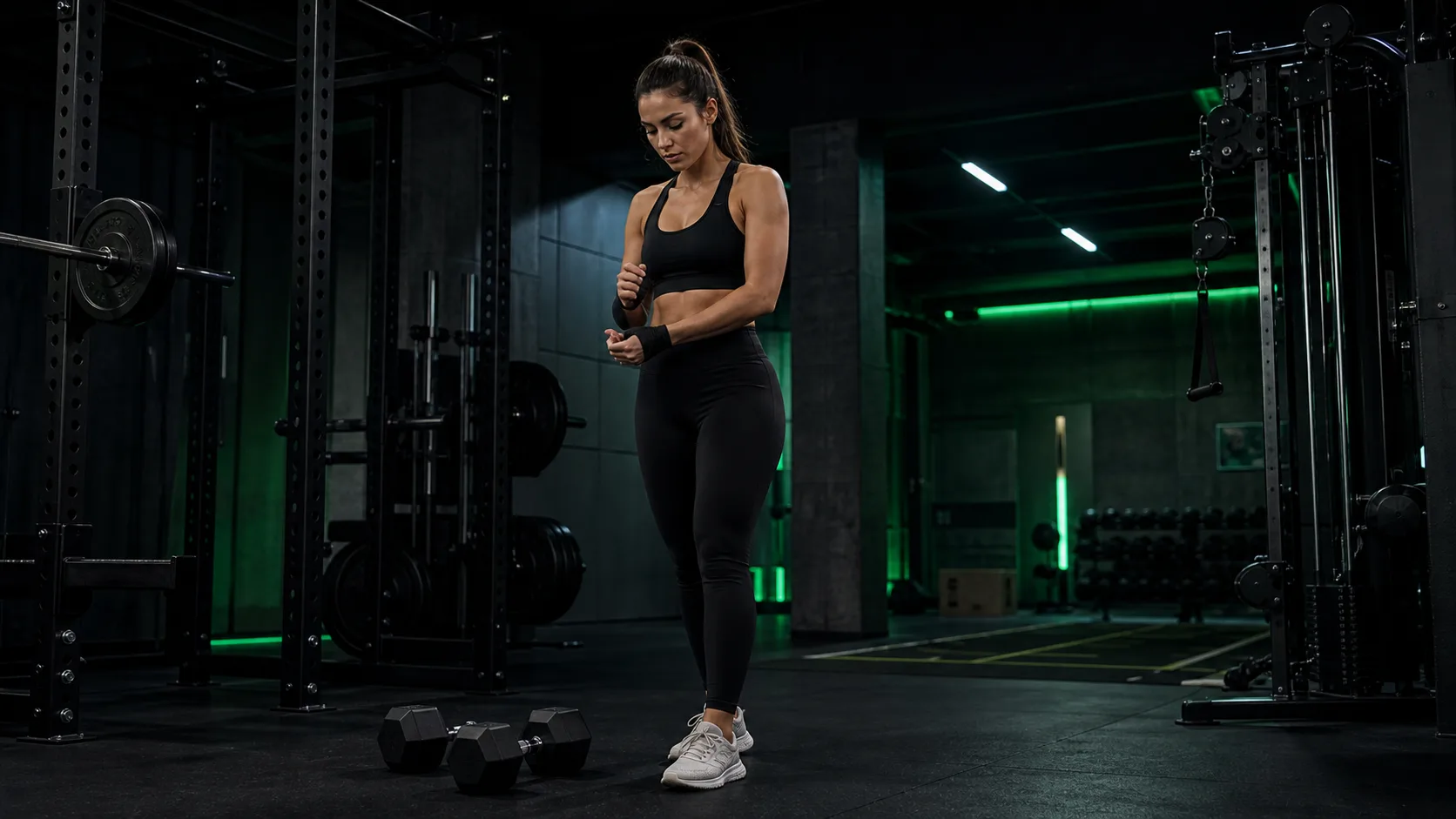
Full-body workouts are one of the simplest ways to start training. Instead of dedicating one day to chest, another to back, and another to legs, you train the major movement patterns in the same session. That means more practice, fewer complicated decisions, and a plan that works even if you can only get to the gym two or three times per week.
Why Full-Body Training Works
Beginners usually improve quickly because every workout is practice. A full-body plan lets you practice squatting, hinging, pushing, pulling, and bracing multiple times per week without needing marathon sessions. It also spreads training stress across the body, so one missed workout does not erase an entire muscle group for the week.
The key is not to do every exercise you know. Pick one movement from each category, do it well, and leave room to repeat the plan.
The Basic Template
- Lower-body knee bend: squat, leg press, split squat, step-up, or lunge.
- Upper-body push: push-up, bench press, dumbbell press, machine press, or overhead press.
- Upper-body pull: row, pulldown, assisted pull-up, or cable row.
- Hip hinge: Romanian deadlift, hip thrust, glute bridge, or back extension.
- Core: plank, dead bug, side plank, farmer carry, or Pallof press.
- Optional finisher: easy cardio, sled push, carries, or mobility work.
Sample Beginner Workout
Start with 5 to 8 minutes of easy movement, then perform one or two light warm-up sets for your first lower-body exercise. A simple workout could be goblet squat for 3 sets of 8, dumbbell bench press for 3 sets of 8 to 10, seated row for 3 sets of 10, Romanian deadlift for 2 sets of 10, and plank for 3 rounds of 20 to 40 seconds.
Use a weight that lets you finish each set with control. If you are guessing, start lighter than you think you need. You can always add weight next time.
How Often to Do It
Two full-body sessions per week is enough to begin. Three sessions per week is a strong target once you recover well. Try to leave at least one rest day between sessions at first, especially if you are sore or learning new movements.
Run the same plan for four to six weeks before changing everything. Beginners often switch too early. Repeating the same exercises gives you cleaner technique and clearer progress.
How to Put This Into Practice This Week
Run the sample full-body structure for the next four weeks before judging it. Use the same main exercises, the same rough order, and the same rep ranges. That repetition is not boring; it is how you learn whether your squat is smoother, your row is stronger, and your recovery is improving.
- Pick one lower-body exercise, one push, one pull, one hinge, and one core exercise.
- Train two or three non-consecutive days this week.
- Add reps before adding weight if you are still learning the movement.