 Back to Blog
Core Training: More Than Crunches
Author
FitChamp Training Team
Training Guide
Date
2026-06-11
Status
published
Read Time
5 min
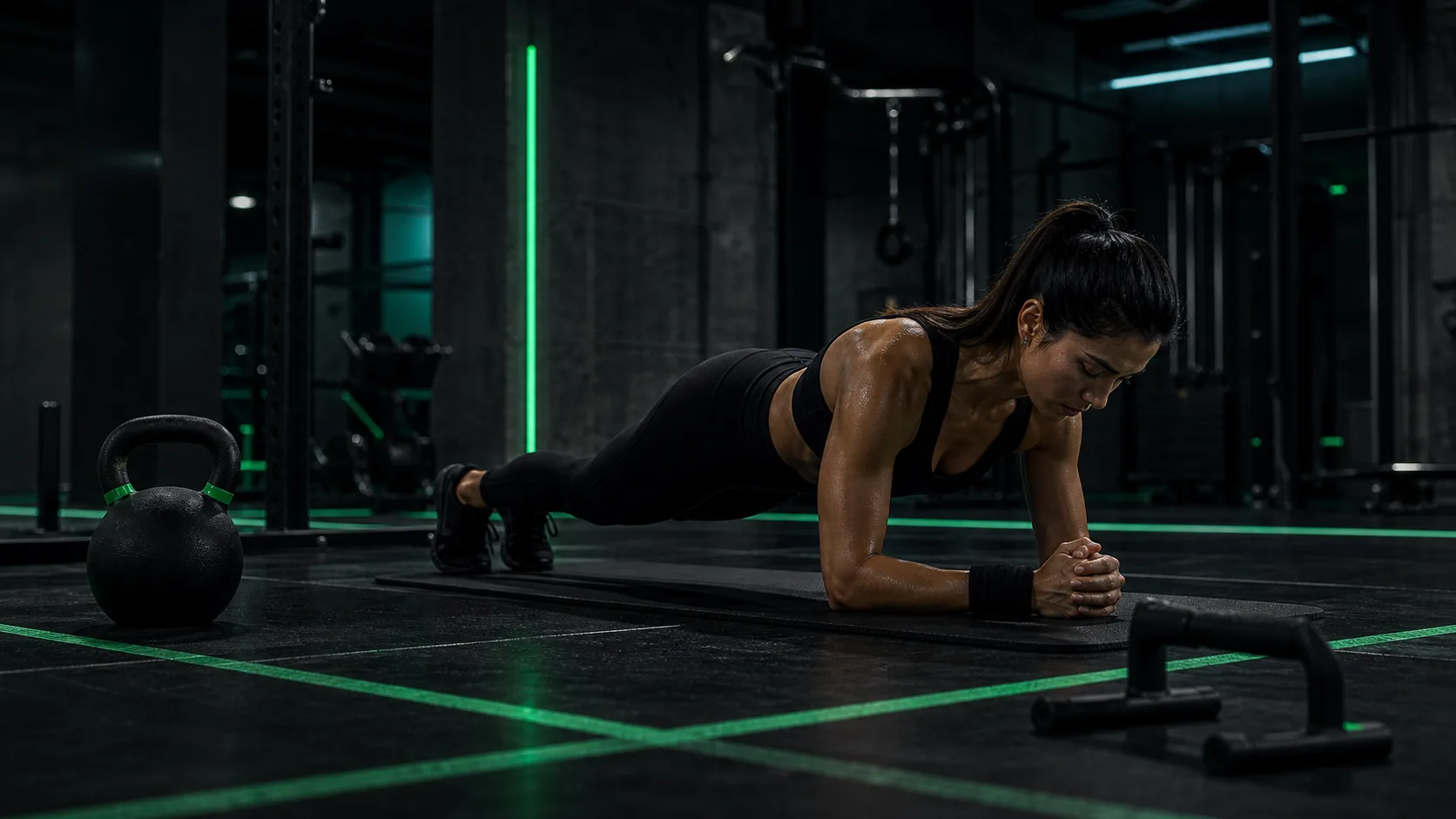
Core training is more than crunches. Your core helps transfer force between your upper and lower body, keeps your spine and pelvis controlled, and helps you resist movement when needed. A good core plan trains stability, rotation, anti-rotation, flexion, and carries.
What the Core Actually Does
During a squat, deadlift, push-up, sprint, or carry, your core is not just bending your torso. It is often bracing so other parts of your body can move with control. That is why planks, dead bugs, carries, and Pallof presses can be just as useful as traditional ab exercises.
Core Exercise Categories
- Anti-extension: plank, dead bug, body saw, ab wheel progression.
- Anti-rotation: Pallof press, bird dog, suitcase carry.
- Rotation: cable chop, medicine ball rotation, controlled Russian twist.
- Loaded carries: farmer carry, suitcase carry, front rack carry.
- Flexion: crunch, cable crunch, reverse crunch.
A Simple Core Routine
Try this two or three times per week after your main workout: dead bug for 2 sets of 8 per side, side plank for 2 sets of 20 to 30 seconds per side, Pallof press for 2 sets of 10 per side, and farmer carry for 3 short walks. Keep every rep controlled.
If your lower back takes over, reduce the difficulty. A shorter plank with good position is better than a long plank where your hips sag.
How Core Work Supports Lifting
Better core control can help you brace during squats, hinges, presses, and rows. It does not replace good technique, but it gives your body more stability to express strength. Core work is also easy to sprinkle into warm-ups, finishers, or short home sessions.
Crunches are not bad. They are just one option. A useful core plan trains your trunk to create movement and resist movement.
How to Put This Into Practice This Week
Add core work where it fits instead of saving it for a mythical perfect ab day. Two or three short blocks per week can be enough. Place core after your main lifts or use easy drills in your warm-up to practice position and breathing.
- Choose one anti-extension move, one anti-rotation move, and one carry.
- Keep reps slow enough that you can breathe and control your ribs and hips.
- Progress by adding time, range, load, or a harder variation.
When to Adjust
Progress core work only when you can control position. Longer sets are not useful if your hips sag, your ribs flare, or your breath disappears. Add difficulty slowly: more time, then more load, then harder variations. Control is the point, not just fatigue.